Showing posts with label marketing. Show all posts

Wednesday, December 3, 2014

Values' Marketing - The case of IKEA in Spain

"This ad is going to go sooo viral" is the first thing I though while watching it

Is a very tender video, with a very true message released on the perfect moment. What else do you need?


We all know that kids prefer company to toys. We knew it from a while ago already. And now that the crisis left us with less money, is the perfect time to finally do something about it.

Values' marketing, the one that focuses on "campaigning" for a good cause instead of "selling" is the perfect choice for a mature brand like IKEA. We all know what IKEA is and what they sell, their best shot is to make us feel better when we buy from them.

Furthermore, they relate the ad to their 2014 campaign that highlights the importance of family (and therefore the house) on kids' education.

Congratulations to IKEA and to the agency: McCann Spain.

Wednesday, October 30, 2013

Marketing and synergies using the know-how: Virgin America

A great creative idea doesn't always come from looking at what you need or where you want to get. Many times it's much easier to find inspiration by looking at what you have to work on, or the actual position you're starting from.

Virgin is a conglomerate of many different kinds of businesses. And Sir Richard Branson's brand airline "Virgin America" is well known for not being shy when it comes to marketing communication in order to support it's great slogan "A breath of fresh Airline".

Their spirit complies with this slogan.The clearest evidence for this is the depth to which they're already involved in the online world and it's trends, as can be most clearly seen on their YouTube Channel; containing dozens of videos of all kinds, trying to get the users to spread their word.

Their latest release (just yesterday) is a music video that tells the safety instructions on a plane in a much nicer way. Their are not the first ones on doing something like that (Delta and New Zealand Airlines did it already in a really). But on Virgin they have taken advantage of their know-how in the video-clip industry, and the result is a hundred times better, thanks mainly to an incredibly good production.

Since it's safety instructions, the content it's still boring sometimes, but they have done the best that can be done with such a base. Enjoy:

Friday, October 4, 2013

Communication through stories: Storytelling applied to Marketing

Marketing is about communicating. And one of the way of communicate something is to telling a story about it. Good ideas get tremendously powerful when told through a story.


One of the best Marketing books for me is "Será mejor que lo Cuentes" a great guide on storytelling by Antonio Nuñez. Storytelling is a high form of art that, nonethelesss, can be applied in a huge range of disciplines including obviously most sorts of communication.

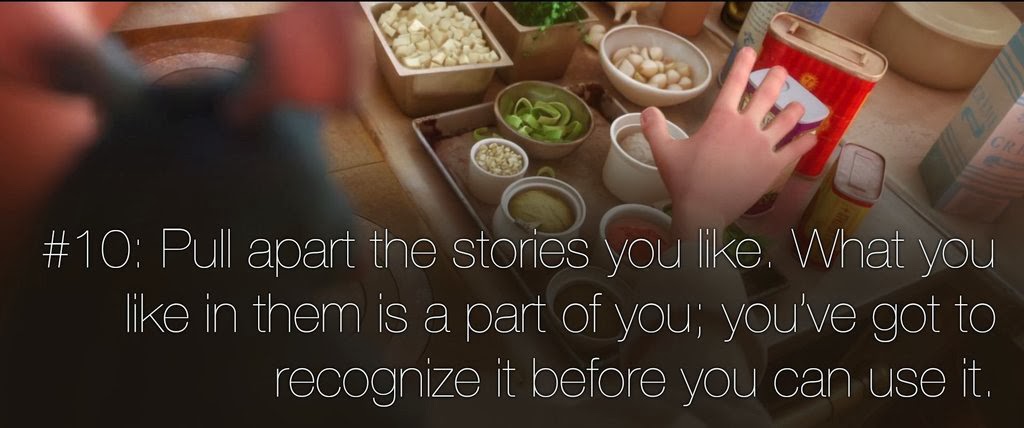
Today I'm bringing you a recap of 22 tips to create great stories by the Story Artist Emma Coats after her time working at Pixar. The beautiful presentation using frames of some of their most famous films was done by the designer Dino Ignacio. I'm sure that any marketing project can be enriched using these tips.

Here they are. Learn and enjoy:


Thursday, March 14, 2013

The future of the Third Sector

Almost everyone would agree that NGOs are a good thing, that Cooperation is positive and that Development Projects are necessary. That's why many of us think about donating money to an NGO, but then various kinds of criticism come to join our natural reluctance to give money away. Even when we trust  that a NGO is not corrupted, and that they really want to make a difference, we keep on worrying about "what are they going to do with the money". 

Well, we all should realize that our criticism of the Third Sector has a totally mistaken focus. We have thought that non-profit Companies shouldn't work under the same rules as the rest. That Marketing, Business Models and Investments are evil tools that the Third Sector must avoid.

This video is a must if you ever thought this. It tells the five ways in which we are judging the Third Sector the wrong way:


But it’s also true that in many NGOs is needed a change in the way things are done. Many of them manage enormous amounts of money and their impact is either small (the money is useless) or negative (they create dependency).
In this other talk, Ernesto Sirolli sets the key of NGOs efficiency when it comes to development projects: Listen to the local entrepreneurs:


If both the people around and the people inside NGOs follow this simple yet effective tips, the future of the Third Sector can be very fruitful. I'm convinced that a change in this direction will lead to finally see non-profit organizations making a big difference.

Wednesday, March 13, 2013

How Loyalty works?

This beautiful and simple infographic (created by the brand new Portugese branding agency "WHY") shows the two parts Consumer Loyalty is composed of:


Some experts will add, in the part of the company "duties", its behavior (Call it Responsibility, Ethics, Authenticity...) and some others think that loyalty doesn't exist in a market where most consumers just care about the price.

All this depends on the actual behavior of the consumers. Do consumers care about what's behind the companies they buy from? And even more important: Are consumers aware of how powerful their purchasing decicions are?

Monday, February 25, 2013

Transmedia, crimes and publicity: All in one.

January 2013, Hannover. Someone stole the golden cookie which the German company "Bahlen" used as the emblem of their brand "Leibniz Keks".
A couple days after the robber sent this picture to a local newsletter:


The robber, dressed as (a seedy version of) the cookie monster, holds the golden cookie. The ransom note says that he wants the company to give cookies to the children in a near hospital, as well as 1000 € to a local animal shelter.
It was hilarious that the note specified the cookies needed for the ransom to be the good ones, "those of milk-chocolate, not the black-chococate or the plain ones".
It was also part of the joke that a former CEO of the company during the 70s went then into a political career, and the press used to call him "the cookie monster".

Of course Sesame street hurried to keep clear that they had nothing to do with all that:
 And the company, also pretty fast, said to the media that they were happily willing to pay a ransom of 52.000 packs of cookies to 52 different NGOs. And reminded of their many current proofs of "social involvement". Just after some more days the cookie was back again.

Since whole story was so funny and beautiful at the same time, it had international effect on the press. Besides, the company managed all this so well that they turned it into a huge opportunity for publicity:


Finally many cookies were given, and the brand gained (or recovered) lots of fans. As they say here in Germany "Ende Gut, Alles gut".

Tuesday, February 12, 2013

INSPIRATION. (Volume 1: TED)

My brother taught me once that learning by listening was way better than by bungling when talking. Then I started realizing how easy and useful it is to listen actively to people: Most of the time they know more than me about the subject and, anyway, they always bring a different perspective that enriches my own idea about it.
Since then I love to get informed about topics I am interested in by any means of verbal communication (the radio, talks, speeches, classes, conferences, debates…). I’m very fond of nice conversations in cafés.
And then, just last year, I discovered a marvelous invention called TED.

TED (Acronym for “Technology, Entertainment, Design”) is an NGO dedicated to spread great discussions and conferences on a variety of different subjects.  The talks are lead by all kinds of different people that are always full of innovative ideas that can change world.
It was created in the 80’s, but went fully on-line in 2006. And it’s on the net, and under a Creative Commons License, that their mission got real strength, because the Speeches started to be available for free all around the world.

On TED I found brilliant discussions about Marketing, such as a very comical speech by Rory Sutherland about how advertising can change the consumers’ perception of the value of a product and further how real and important this value becomes:


TED consolidated my ideas about the huge power and responsibility that consumers have on discussions such as the one given by John Gerzema. Just one of the many stirring speeches about Consumer Behavior and Market Research that can be found flicking through the Tags’ listing on TED’s App for Android and iPhone:


But also thanks to TED, I’ve discovered how a social stigma (like mental illnesses) can be fought and altered with humor. The comedian Ruby Wax shows how in this very intelligent speech (Or should it be called stand-up comedy?):


TED even provided me with an easy way to answer when friends ask me “but what’s this thing about meditation?”, because I could never explain it better than Andy Puddicombe in his own words:
-


Business educator Eddie Obeng taught me in his electrifying speech that Problem Solving should be, nowadays, Problem Forecasting. He says that getting something wrong is not always failing because in our world “after midnightthere’s certainly not enough to make safe decisions:


And last but not least, TED has reminded me how crucial positive thinking on life and work is. For instance, in this hilarious speech by Shawn Achor I learned that the Competitive Advantage is not as important as the “Happiness Advantage”:


So, when I decided to create a series of Posts about the things that inspire me, I knew that TED was going to be the first one. Because all my favorite speeches on TED give me hints how to evaluate the present and also how I want things to be in the future. And that is, as I see it, pure inspiration.

Thursday, January 10, 2013

Small-scale Branding: Street Marketing for start-ups

Direct, Street, Gerrilla, Ambient. This different names have been given to the slightly different varieties of a same kind of Marketing actions.
This BTL advertising is characterized by being normally on the street and using its elements to attract the attention of the people passing by. Besides, this kind of actions are normally very creative and even funny. And a main feature is that they don't disturb to send their message but try to get the attention of the individuals by surprising them.
This turns them into interactive and very memorable actions, and thus its effectiveness rockets.

The bad part is that, as many innovations and great ideas in Marketing, many people thinks that this kind of actions are only within the reach of big companies. Well, this is a complete nonsense. One of the features of this kind of Marketing is its posibility of being "low-cost".


You just need a good idea to make people stop and look to your message. You have to start from a very simple idea you'd like to communicate and put it on the streets in a way that always has to be:

  -Nice to bump into, whoever does it.
  -Interesting to your potential consumers, telling them something
(Of course, as always, humour is a good way to acomplish this two objectives.)

Maybe you are willing to try some Street Marketing for your small business, but you are too busy to take charge of it, or you don't find capable of organizing all that is needed to set it off. In this case I recommend you to turn to a small local advertising agency.

They are going to be thrilled with the challenge, and their small size is perfect for giving you this service with a low price. Besides, being local they will be able to know how and where to reach your potential costumers in the city.

After trying Street Marketing in your small business, you'll leef how effective this kind of actions can be in a local scope.

Do you think just big brands can use Guerrilla Marketing? By using a good idea, costumers can be reached with a really small bugdget.

Thursday, November 29, 2012

Marcas de "chuches" que venden camisetas.


¿Porqué algunas marcas "molan" tanto como para ser dignas de lucirse en una camiseta mientras otras sólo aparecerían vía merchandising en una camiseta que además estaría destinada a ser "camiseta de pijama"?

Fotos de  CAMISETA VESPA

Esta pregunta se ha planteado en muchas ocasiones en el mundo del Diseño. Un logo bien diseñado es esencial para que la marca pueda conseguir que una estrategia de distribución pull funcione. Pero la estética no es la parte más importante.

El marketing*, aunque cada vez más la conducta de la compañía, es lo que define los valores y la actitud que el público relaciona con cada marca. Y esos valores y esa actitud es lo que da vida a la marca. El final de la ecuación es que una marca necesita vida si quiere relacionarse con la gente. Nadie ama a un genérico, por eso a todos nos gusta sentirnos "especiales".

Es esta actitud lo que hace que algunas marcas se quieran vestir, porque tienen una actitud en la que su público quiere verse reflejado, unos valores similares o una imagen que quiere ser alcanzada. En muy pocas ocasiones sucede todo lo contrario. Pero muy a menudo simplemente no pasa nada, la marca no nos dice nada.

Viendo dos ejemplos del mundo de los productos de consumo, podemos encontrar las dos "caras de la moneda": Chupa Chups y Fiesta.

Fiesta es un productor español de golosinas. Sus productos son de buena calidad. Y ya está. No pasa nada más.

FIESTA


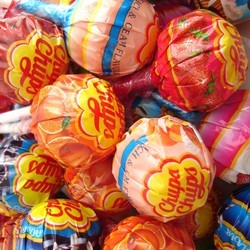
Chupa Chups, en cambio, intenta ser una marca "love" y para parte de su público lo es. Su logo (diseñado -en parte- por el mismísimo Salvador Dalí) aparece muy a menudo en objetos muy dispares a todo lo relacionado con los caramelos con palo. La marca es tan conocida, que decir "caramelo con palo" en España nos suena a broma.


Aunque el concepto "escuchar al consumidor" suene a marketing moderno, este ha sido el gran acierto que ha llevado a la firma catalana a ser lo que es hoy. Su producto estrella nació así (la gente necesitaba sacarse los caramelos de la boca sin pringarse). Y como esa escucha les funcionó tan bien,  los responsables de la empresa se acostumbraron a seguir haciéndolo. Por eso saben lo tienen que decir, dónde tienen que estar y cómo deben comportarse para "molar tanto".

Y así es, Chupa Chups "mola tanto" que la gente compra camisetas con su logo.

En Chupa Chups están tan seguros de sí mismos, que se permiten hacer un anuncio en el que dice que "sería el fin del mundo" sin ellos.


*Entiéndase Marketing con todo lo que comprende. No sólo la publicidad, sino también toda la comunicación interna, así como las estrategias de precio, distribución y RR.PP., y las decisiones sobre el producto.

Friday, November 18, 2011

Applause

I want to ask for a big hand to Thomas Ilum and Vogelius Zoe, two german students who had a great idea.

Just adding a really creative vinyl to the FedEx vans they "prove" the idea of the claim using one of theis main competitors: DHL


Besides, FedEx has already made some campaigns using the images of the competitors. In the USA, comparative advertising is more normal and well acepted than in many European countries. This is why FedEx is so explicit when doing this, using clearly the images of their competitors.
Here another example:


Being students, Thomas and Vogelius deserve a really big applause.

Sunday, November 6, 2011

Brandin-G Bibles

For sure there are many great books about brands, branding and marketing focused on brand strategy. But since my intention here is not covering all the knowledge, but remark remarkable spots, I set out to present two books which deserve to be read by anyone interested in Branding.
“What is Branding?” by Matthew Healey, and “Wally Olins. On B®and” by, of course, Wally Olins. They are both quite different but truly interesting and educational.

Written as a story rather than a manual, Wally Olins. On Brand (of which I have the Spanish edition “B®and. Las marcas según Wally Olins”) has a critical and accurate perspective of the changing world of branding. It analyzes several parts of branding trying to give a historical vision from its origins to its possible future. Olins always keeps the personal point of view (including a touch of self-selling) that is conspicuous for not being afraid of change or nostalgic of yesteryear's branding that he helped to create.

From Wally Olins. On Brand (Olins, W. Oxfordshire, 2003): "For each company developing a global and unique corporate brand, there's another doing exactly the opposite".


On my other hand, in English this one, there is What is Branding? . It is sharply organized by topics, and completely filled of beautiful pictures and interesting evidences of all the arguments that Healy puts forward.
The book deals with the challenges when “practicing” branding, all the details to take into account when creating a brand, and a handful of examples of what to do and what not to do.

From What is Branding? (Healey, M. New York, 2008): “Great brands never change, and change constantly”.


The main point that both books share is that, for any communication (not just from business -also from nonprofit societies-, not just from organizations -also from countries-, not even just from groups -also from individuals-) brands and, therefore, branding are key elements.
Congratulations to both authors, their work may appear again in BRANDIN-G